
When choosing foam for industrial insulation, understanding the difference between open cell and closed cell foam is essential. Although they may look similar, their internal structures give them very different properties when it comes to sound absorption, thermal insulation, moisture resistance and mechanical performance.
So, which is better: open cell or closed cell foam? The answer depends on the application.
In this guide, we’ll explore the key differences between these two foam structures, their advantages and limitations, and how to select the right material for demanding industrial environments.
What is open cell foam?
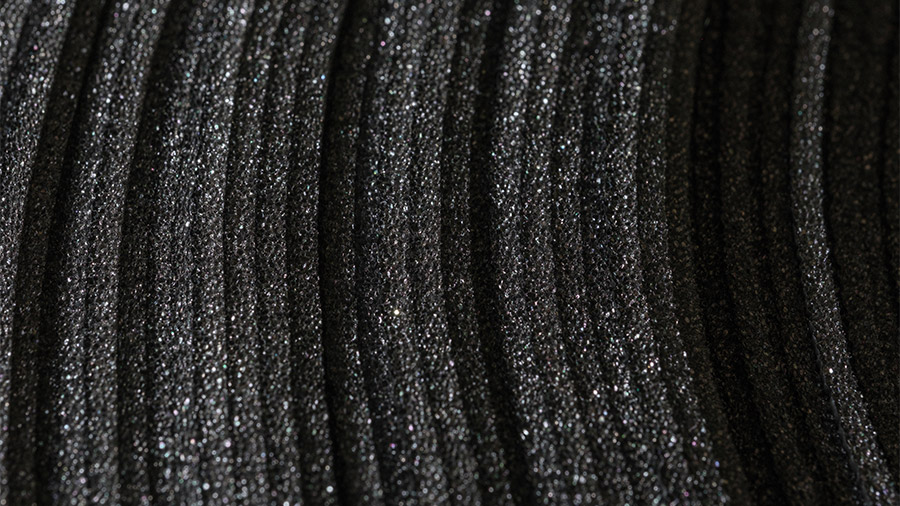
Open cell foam is a lightweight, porous material made up of interconnected cells that allow air to move through its structure.
This open structure makes the foam typically soft, flexible and highly effective at absorbing sound. When sound waves enter the material, part of their acoustic energy is dissipated through friction and thermal interactions within the interconnected pores.
Open cell foam is commonly manufactured from polyurethane (PU) and other polymers. Its properties can be tailored by adjusting the cell structure, density, thickness and material composition.
Key advantages of open cell foam
- Effective sound absorption: Its porous structure helps reduce reflected sound and reverberation.
- Lightweight construction: Many open cell foams offer acoustic performance without adding significant weight.
- Flexibility: Soft foam can conform to complex shapes and uneven surfaces.
- Air permeability: Interconnected pores allow airflow, making certain grades suitable for filtration.
- Versatility: Available in different densities, thicknesses and formulations for industrial applications.
Typical applications of open cell foam
Open cell foam is particularly suitable for applications where sound absorption, flexibility or airflow are important.
Common examples include machinery enclosures, operator cabins, vehicle interiors, ventilation systems, acoustic panels and air filtration.
Its porous structure also means that open cell foam generally absorbs moisture more readily than closed cell alternatives. This needs to be considered when selecting materials for humid or wet environments.
What is closed cell foam?
Closed cell foam consists of individual cells that are largely sealed off from one another. Unlike open cell foam, its structure significantly restricts the movement of air and water through the material.
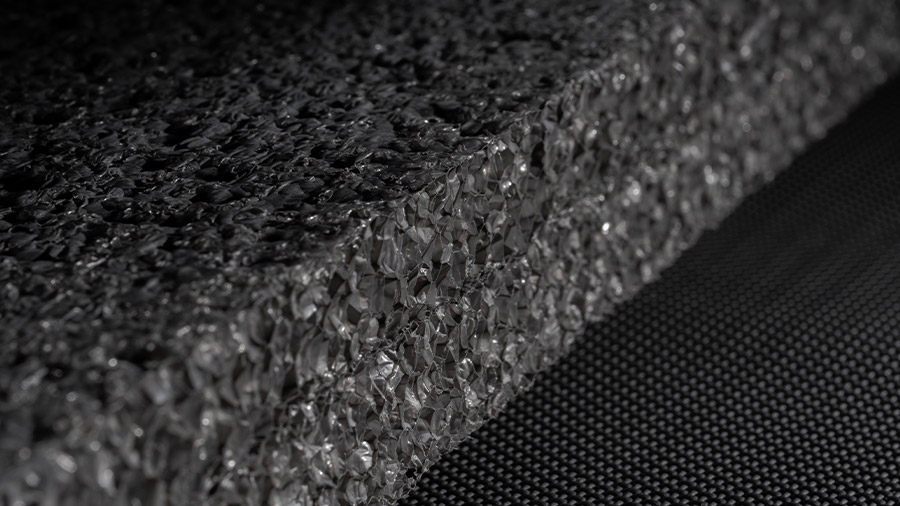
Depending on its composition, closed cell foam can be rigid or flexible. Common materials include polyethylene (PE), polyurethane (PU) and various elastomeric foams such as cell rubber.
The enclosed cell structure provides excellent opportunities for thermal insulation, moisture resistance, sealing and mechanical protection.
Key advantages of closed cell foam
- Moisture resistance: Its sealed structure generally limits water absorption.
- Thermal insulation: Many closed cell formulations provide excellent resistance to heat transfer.
- Mechanical durability: Suitable grades can withstand compression, wear and demanding operating conditions which makes them suitable for applications such as industrial floor matting.
- Sealing performance: Closed cell foam is commonly used for gaskets and seals that restrict air, water or dust ingress.
- Dimensional stability: Certain formulations maintain their shape and performance under mechanical stress.
Typical applications of closed cell foam
Closed cell foam is widely used in marine applications, HVAC systems, industrial machinery, vehicle manufacturing, and equipment sealing.
It is especially useful in applications where moisture resistance, condensation control or thermal insulation is a priority.
Closed cell foam is not automatically waterproof or vapour-tight. Its performance depends on the material, thickness, cell structure and installation method.
Open cell vs closed cell foam: Key differences
The most important difference between open cell and closed cell foam is their internal structure. This affects how they interact with sound, heat, moisture and mechanical loads.
| Property | Open cell foam | Closed cell foam |
|---|---|---|
| Cell structure | Interconnected pores | Mostly sealed, separate cells |
| Sound absorption | Generally excellent | Typically more limited |
| Sound blocking | Limited when used alone | Depends on mass and construction |
| Thermal insulation | Good, depending on formulation | Often excellent |
| Moisture resistance | Generally lower | Generally higher |
| Air permeability | Typically higher | Typically lower |
| Flexibility | Usually soft and flexible | Ranges from flexible to rigid |
| Density | Often lower | Often higher |
| Typical applications | Acoustic absorption, filtration, cushioning | Thermal insulation, sealing, moisture control |
These are general characteristics rather than universal specifications. Performance varies significantly between different polymers, foam densities and product constructions.
Which foam is better for sound insulation?
When comparing open cell vs closed cell foam for sound insulation, it’s important to distinguish between sound absorption and sound blocking.
These are two different acoustic functions.
Sound absorption: Reducing reflected sound
Open cell foam is generally the better choice for sound absorption.
Its interconnected pores allow sound waves to penetrate the material, where acoustic energy is partially converted into heat.
This makes open cell foam useful for reducing reverberation and controlling noise within machinery enclosures, ventilation ducts and operator cabins.
Acoustic performance depends on more than cell structure. Foam thickness, airflow resistivity, density, frequency range and installation all influence the result.
Sound blocking: Preventing noise transmission
Sound blocking refers to reducing the amount of sound that passes from one space into another.
Neither open cell nor closed cell foam automatically provides effective sound blocking on its own.
While closed cell foam may contribute to acoustic insulation in certain constructions, its cell structure alone does not guarantee high sound transmission loss.
Effective sound blocking often requires additional mass, vibration isolation or a combination of materials.
For demanding industrial noise control, combining sound-absorbing and sound-blocking layers can deliver better results than relying on a single foam material.
Which foam is better for thermal insulation?
Both open cell and closed cell foam can provide effective thermal insulation, but their performance depends on the specific formulation.
Closed cell foam often offers better thermal resistance at a given thickness, particularly in certain polyurethane insulation systems.
Its enclosed cells restrict gas movement, and some formulations use low-conductivity gases to further reduce heat transfer.
Open cell foam also provides thermal insulation by trapping air within its porous structure, but may require greater thickness to achieve equivalent performance.
For industrial applications, the most reliable comparison is the material’s thermal conductivity (λ-value), expressed in W/(m·K).
The lower the thermal conductivity, the better the material resists heat transfer under comparable conditions.
Material selection should also account for operating temperature, moisture exposure, installation space and long-term durability.
Open cell vs closed cell foam in humid environments
Moisture exposure is often a deciding factor when choosing between foam types.
Open cell foam allows greater interaction between its internal pores and the surrounding environment. This can increase the risk of water absorption in applications involving direct moisture exposure.
Closed cell foam generally offers better resistance to water absorption, making it a common choice for condensation insulation, sealing and humid environments.
For example, closed cell polyethylene foam can be suitable for thermal and condensation insulation in marine and industrial applications.
Preventing condensation requires more than choosing the correct foam. Insulation thickness, surface temperature, vapour resistance and the integrity of joints and seams must also be considered.
Industrial applications: Choosing the right foam
Different industrial environments create different insulation challenges. The right choice depends on which performance requirements matter most.
Machinery and operator cabins
Open cell foam can be used to absorb sound within machinery housings and operator cabins. Where noise transmission is also a concern, combining absorptive foam with heavier sound-insulating layers may improve overall performance.
Marine applications
Marine environments often involve moisture, temperature changes and vibration.
Closed cell foam can be useful for condensation control and moisture-resistant insulation, while suitably protected open cell materials may be used where acoustic absorption is required.
Material selection must also consider applicable fire safety requirements and environmental exposure.
HVAC and ventilation
Open cell foam can help absorb sound generated by fans and airflow, while closed cell materials are commonly used for thermal insulation, sealing and condensation control.
The best solution may involve different materials in different parts of the system.
Vehicles and transport equipment
Both foam types are used in vehicle manufacturing.
Open cell materials can provide acoustic absorption and cushioning, while closed cell materials can be used for sealing, thermal insulation and protection against moisture.
The final selection depends on weight, space, durability, acoustic performance and applicable fire safety requirements.
Beyond open cell vs closed cell: Why multilayer insulation matters
In demanding industrial environments, choosing between open cell and closed cell foam is often only the beginning.
A single material rarely provides optimal performance across every requirement.
For example, an operator cabin may need sound absorption, sound transmission reduction, thermal insulation, vibration control and mechanical durability simultaneously.
This is where multilayer insulation solutions come into play.
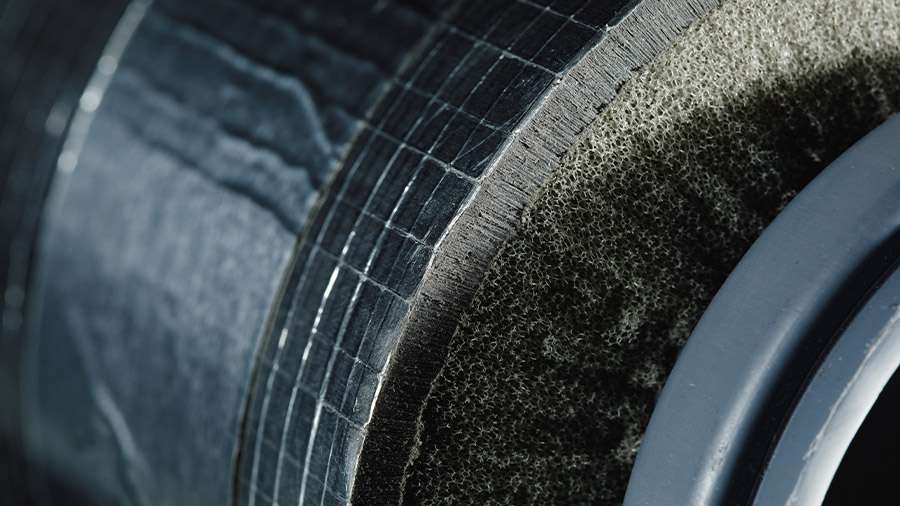
By combining materials with complementary properties, it is possible to create insulation structures tailored to specific performance requirements.
An effective multilayer construction might combine:
- An open cell foam layer for sound absorption.
- A high-mass layer for reducing sound transmission.
- A closed cell foam layer for thermal insulation or moisture resistance.
- Adhesive, protective or surface layers to improve installation and durability.
The construction must be engineered as a complete system, with attention to layer thicknesses, mechanical coupling, operating conditions and the relevant acoustic frequencies.
Meluton: Combining materials for better performance
At Meluton, we’ve been developing insulation solutions for demanding industrial environments since 1977.
As an independent Finnish manufacturer, we specialise in multilayer lamination, combining carefully selected materials to meet the acoustic, thermal and mechanical requirements of different applications.
Our expertise covers everything from material selection and product development to customised insulation solutions for OEM manufacturers.
Rather than limiting the solution to one foam type, we focus on finding the right combination of materials for the intended application.
Frequently asked questions
Is open cell or closed cell foam better for soundproofing?
Open cell foam is generally more effective at absorbing sound, while soundproofing against noise transmission typically requires additional mass or a specially designed multilayer construction. Neither foam type alone guarantees effective sound blocking.
Is closed cell foam waterproof?
Closed cell foam generally resists water absorption better than open cell foam, but not all closed cell products are completely waterproof. Performance depends on the formulation, thickness and installation.
Can open cell foam be used for thermal insulation?
Yes. Open cell foam can provide effective thermal insulation, although certain closed cell formulations offer better thermal resistance at the same thickness.
Is closed cell foam always denser than open cell foam?
No. Although closed cell foams are often denser, density depends on the polymer, manufacturing process and intended application. The cell structure alone does not determine the material's density.
Can open cell and closed cell foam be combined?
Yes. Combining different foam types and complementary materials can help achieve multiple performance objectives within a single insulation construction.
Find the right insulation solution with Meluton
Choosing between open cell and closed cell foam requires more than comparing their basic properties. The best material depends on the operating environment, acoustic and thermal requirements, mechanical demands and available installation space.
At Meluton, we help OEM manufacturers and industrial professionals develop insulation solutions that meet their specific challenges.
Looking to improve the acoustic or thermal performance of your product?
Talk to our engineers and discover how the right combination of materials can make the difference.